星期一, 6月 07, 2010

彩色印表機內藏暗碼 讓政府追蹤你

中文:http://www.wretch.cc/blog/fsj/2220394
Secret Code in Color Printers Lets Government Track You

EFF 的研究團隊最近破解了在幾款彩色雷射印表機追蹤網點(tracking
dots)背後隱藏的暗碼。美國特務局承認這些追蹤資訊是與被選擇的印表機
製造商之間的交易,表面上是為了阻止大家利用他來列印偽鈔。然而,大家
卻不知道這些追蹤網點中內藏了哪些資訊。

EFF 的技術員工 Seth David Schoen 說:我們發現,這些至少有一行的追
蹤網點當中,內藏列印時的時間與印表機的序號。

你可以在 Xerox, Canon 及其他印表機上發現(其他詳見:
http://www.eff.org/Privacy/printers/list.php)。這些追蹤網點是 "黃
色" 直徑小於 1mm,而且會在同一頁當中反覆出現。為了要能看見這個網點
,你可以使用藍光以及放大鏡或顯微鏡來觀看。(詳見:
http://www.eff.org/Privacy/printers/docucolor/)

EFF 與其夥伴在其計畫當中首先將 Xerox DocuColor 產品線的編碼給破解
。研究人員 Schoen,以及 EFF 實習生 Robert Lee 以及義工 Patrick
Murphy 與 Joel Alwen 比對由 EFF 支持者送來的樣本,發現這些網點排列
上的異同,並且發現一個簡便的方式來讀取這些圖樣。

到目前為止,我們只破解了 Xerox DocuColor 暗碼的意義,Schoen 說,不
過我們相信在其他廠商的其他型號當中也藏有相同的個人追蹤資訊。

你可以在這裡使用線上的 EFF 自動解碼程式:
http://www.eff.org/Privacy/printers/docucolor/index.php#program.

Xerox 先前就已經承認他們提供這些追蹤網點給政府,不過只有特務局可以
讀取這些編碼,而特務局也只在犯罪調查當中使用。然而,目前沒有任何法
律可以阻止政府濫用這些資訊。

地下民主運動,會產生政治上或宗教上的小冊子以及傳單,例如在 1980 年
代俄羅斯發行的地下刊物,都需要經過特別的檢查才能追蹤,然而透過這些
科技,政府可以更容易追蹤這些異議份子,EFF 的員工 Attorney Lee Tien
說,甚至更糟的是政府與私人產業之間的協議,透過每日使用的設備,例如
印表機來削弱我們的隱私權。另一個邏輯上的問題是:目前已經或是正在進
行哪些交易,讓那些我們的科技在背叛我們。

EFF 現在仍在破解其他印表機的編碼,而我們需要公眾的協助。可以到這裡
發現更多的資訊:
http://www.eff.org/Privacy/printers/wp.php#testsheets

竊聽你的鍵盤打字音

中文:http://www.wretch.cc/blog/fsj/2092358
Acoustic Snooping on Typed Information

柏克萊大學的 Li Zhuang, Feng Zhou, 與 Doug Tygar 這三位學生完成了
一份研究報告,證明可以透過一般的錄音裝置或是竊聽器錄下 15 分鐘左右
的鍵盤敲擊聲,他們就有辦法辨識出你在鍵盤上打了哪些字。這個點子是來
自於每個鍵盤所發出的聲音其實是稍微不同的。雖然你聽不出有哪些差異,
不過你可以透過機器學習出打字的模式來。雖然這個研究是假定以英打為主,
不過其他語言也一樣適用。

Asonov and Agrawal 在先前也曾發表過類似的研究,不過他們(不切實際
的)假設透過打字者在目標鍵盤上輸入某些特定的 "訓練" 字句來辨識。而
這個新方法消除了這種需求,因而顯得較為實用。

這個演算法以下列三個基本策略為主。其一,他分離每個鍵盤的敲擊聲;其
二,他取得全部的敲擊錄音,然後將其分為 15 類,每類底下的聲音十分相
似;其三,他使用精緻的(fancy)機器學習方法,在假定輸入順序具有英
文輸入的統計特徵下,復原字元的輸入順序。

第三步驟最為困難,由於你是從已經分類好的類別開始的,所以鍵盤的順序
性已經改用分類識別符號來表示,例如:

35, 12, 8, 14, 17, 35, 6, 44, ...

(這表示第一個鍵的分類是 35,第二個在 12 諸如此類。切記,同一類的
鍵盤聲很相似。)在這個狀況下,你可以假設鍵盤上的每一個按鍵通常(但
並非總是)會產生一種特別的 "分類",不過你不知道哪一個鍵產生該分類
。有時候二個鍵會傾向產生相同的分類,所以你得依靠文章脈絡將他們分離
。而且有時候所敲入的東西會產生與原文不相符的特徵出來,因為那時候這
個鍵發出不同的聲音出來。當然特徵演算法不夠好也是原因之一,甚或打字
的人也有可能輸入錯誤打入了一些垃圾字元。

你唯一佔優勢的地方在於,英文句子其實具有一定的規律性。舉例來說,二
字元的順序 "th" 要比 "rq" 來的常見,而 the 要比 xprid 要來的常見,
這些以足夠讓現代的機器學習方法完成這項工作,儘管有如同前述般困難重
重。所恢復的文字有 95% 的正確性,而且 90% 的單字可讀性很高。

[給駭客等級讀者的練習: Assume that there is a one-to-one mapping
between characters and categories, and that each character in the
(unknown) input text is translated infallibly into the
corresponding category. Assume also that the input is typical
English text. Given the output category-sequence, how would you
recover the input text? About how long would the input have to be
to make this feasible?]

如果你輸入密碼,當然也能夠被恢復。雖然密碼並不與一般文字那樣具相同
的統計特性(除非你的密碼很爛),不過只要經過適當的英打訓練,這些密
碼也不成問題。雖然這個演算法不能 100% 的復原密碼,不過可以完成一份
近似密碼的清單給你,而且真正的密碼通常也會出現在其中。

在這裡我們仍要想到,有多少電腦安全是依賴 "物理性存取" 來控制電腦。
我們都知道任何人都可以打開電腦並透過可以控制他的工具來使用他。這項
研究結果顯示,可以透過感應器來危急這台電腦的安全。

這裡有些初步的結果顯示每台電腦會因為他們正在進行不同的工作而發出不
同的聲音。如果這時後你有錄音裝置,那麼你就能進行解碼工作恢復加密的
金鑰了。

我想,我還是把辦公室的門關上比較好。

只用馬賽克處理敏感資料,是件餿主意!

http://dheera.net/projects/blur.php

打過馬賽克資料,依演算法被還原機率很高,所以最好的方式,就是把資料全部塗黑、反白...或以相同顏色全塗過即可。


英文原文如下:

Why blurring sensitive information is a bad idea

Undoubtedly you have all seen photographs of people on TV and online who have been blurred to hide faces. For example, here's one of Bill Gates:

Adapted from the Wikimedia Commons

For the most part this is all fine with peoples' faces as there isn't a convenient way to reverse the blur back into a photo so detailed that you can recognise the photo. So that's good if that is what you intended. However, many people also resort to blurring sensitive numbers and text. I'll illustrate why that is a BAD idea.

Suppose someone posted a photo of their check or credit card online for whatever awful reason (proving to Digg that I earned a million dollars, showing something funny about a check, comparing the size of something to a credit card, etc.), blurring out the image with the far-too-common mosaic effect to hide the numbers:


Seem secure because nobody can read the numbers anymore? WRONG. Here's a way to attack this scheme:

Step 1. Get a blank check image.
There are two ways of doing this. You can either Photoshop out the numbers in your existing image, or in the case of credit cards, you can get an account with the same organization and take a photo of your own card from the same angle, and match the white balancing and contrast levels. Then, use your own high resolution photo to photoshop out your numbers.
This is easy in these example images, of course:


Step 2. Iterate.
Use a script to iterate through all the possible account numbers and generate a check for each, blocking out the various sections of digits as sections. For example, for a VISA card, the digits are grouped by 4, so you can do each section individually, thus requiring only 4*10000 = 40000 images to generate, which is easy with a script.

Step 3. Blur each image in an identical manner to the original image.
Identify the exact size and offset, in pixels, of the mosaic tiles used to blur the original image (easy), and then do the same to each of your blurred images. In this case, we see that the blurred image we have 8x8 pixel mosaic units, and the offset is determined by counting from the top of the image (not shown):

Now we iterate through all the images, blurring them in the same way as the original image and obtain something like this:

Step 4. Identify the mozaic brightness vector of each blurred image.
What does this mean? Well, let's take the mozaic version of 0000001 (zoomed in):


... and identify the brightness level (0-255) of each mozaic region, indexing them in some consistent fashion as a=[a_1,a_2...,a_n]:


In this case, the account number 0000001 creates mozaic brightness vector a(0000001)=[213,201,190,...]. We find the mozaic brightness vector for every account number in a similar fashing using a script to blur each image and read off the brightnesses. Let a(x) be the function of the account number x. a(x)_i denotes the ith vector value of the mozaic brightness vector a obtained from account number x. Above, a(0000001)_1 = 213.

We now do the same for the original check image we found online or wherever, obtaining a vector we hereby call z=[z_1,z_2,...z_n]:


Step 4. Find the one with the closest distance to the original image.
Identify the mozaic brigtness of the original image, call it z=[z_1,z_2,...z_n], and then simply compute the distance of each account number's (denote by x) mozaic brightness vector (normalizing each first):

d(x)=sqrt((a(x)_0/N(a(x)) - z_0/N(z))^2 + (a(x)_1/N(a(x)) - z_1/N(z))^2 + ...)

where N(a(x)) and N(z) are the normalization constants given by

N(a(x)) = (a(x)_0^2 + a(x)_1 ^2 + ...)^2
N(z) = (z_0^2 + z_1 ^2 + ...)^2

Now, we then simply find the lowest d(x). For credit cards, only a small fraction of possible numbers validate to hypothetically possible credit card numbers, so it's an easy check as well.

In the above case, we compute, for example,

N(z) = sqrt(206^2+211^2+...) = 844.78459
N(a(0000001)) = 907.47837
N(a(0000002)) = 909.20647
...

and then proceed to calculate the distances:

d(0000001) = 1.9363
d(0000002) = 1.9373
...
d(1124587) = 0.12566
d(1124588) = 0.00000
...

Might the account number just be 1124588?

"But you used your own crafted easy-to-decipher image!"
In the real world we have photos, not fictitious checks made in Photoshop. We have distortions of the text because of the camera angle, imperfect alignment, and so on. But that doesn't stop a human from determining exactly what these distortions are and creating a script to apply them! Either way, the lowest few distances determined can be considered as candidates, and especially in the world of credit cards, where numbers are nicely chunked out in groups of 4, and only 1 in 10 numbers is actually a valid number, it makes it easy to select from your top few lowest distances, which the most likely candidates are.

One important thing that one would need to do in order to implement this on real photos is to improve the distance algorithm. For example, one can rewrite the distance formula above to normalize the standard deviations in addition to the means to improve performance. One can also do the RGB or HSV values independently for each mozaic region, and one can also use scripting to distort the text by a few pixels in each direction and compare as well (which still leaves you with a feasible number of comparisons on a fast PC). One can also employ algorithms similar to existing nearest-shape algorithms to help improve the reliability of this on real photos.

So yes, I used an image against itself and designed it to work here. But the algorithem can surely be improved to work on real stuff. I don't have the time nor desire to improve this any further, though, because I'm not the one after your information. But one thing is for sure: it's a very easy situation to fix. Don't use simple mosaics to blur your image. All you do is reduce the amount of information from an image containing only log(10^N)/log(2) effective bits of account data. When you distribute such images, you want to eliminate personal information, not obscure it by reducing the amount of visual information in the image.

Think about creating a 100x100 graphic on the screen. now lets say i just averaged out the entire graphic and replaced every pixel with the whole average (i.e. turn it into a single pixel "mosaic"). You have just created a function that starts with 256^(10000) possibilities and hashes it to 256 possibilities. There is obviously no way with the resulting 8 bits of information you can possibly reverse it to the original image. However, if you know that the original image was one of 10 possibilities, you can easily have success at determining which of the original images was used from just knowing the resulting 8-bit number.

Analogy to a dictionary attack
Most UNIX/Linux system administrators know that /etc/passwd or /etc/shadow store passwords encrypted using one-way encryption such as Salt or MD5. This is reasonably secure since nobody will ever be able to decrypt the password from looking at its ciphertext. Authentication occurs by performing the same one-way encryption on the password entered by the user logging in, and comparing that result to the stored one-way result. If the two match, the user has successfully authenticated.

It is well known that the one-way encryption scheme is easily broken when the user picks a dictionary word as their password. All an attacker would have to then do is encipher the entire English dictionary and compare the ciphertext of each word to the ciphertext stored in /etc/passwd and pick up the correct word as the password. As such, users are commonly advised to pick more complex passwords that are not words. The dictionary attack can be illustrated like this:


The similary to the dictionary attack on the blured image attack lies in the fact that blurring an image is a one-way encryption scheme. You are converting the image you have into another image designed to be unreadable. However, since account numbers only typically go up to the millions, we can assemble a "dictionary" of possible account numbers - that is, all the numbers from 0000001 to 9999999, for example, use an automated image processor to photoshop each of those numbers onto a photo of a blank check, and blur each image. At that point, one can simply compare the blurred pixels to see what most closely matches the original blurred photo we have.

Solution
The solution is simple: Don't blur your images! Instead, just color over them:


Remember, you want to leave your visitors with NO information, not blurred information.


※ 相關報導:

* 電子護照易複製 安全亮紅燈
* 西北航空登機證產生器後續
* 大陸女教授王小雲 破解美國安局超難密碼

觸碰式螢幕 可辨識誰在摸來摸去!

東森新聞 國際中心/綜合報導 2006-05-25 16:43

觸碰式科技向來被廣泛應用在工商業界或是電玩產業。最近觸碰式科技還有
更進一步的突破,日本與美國的研究人員,就研發出可辨識不同使用者的觸
碰式螢幕,未來可以應用在影音電玩與醫療科技上,前景看好。

美國與日本研究人員所研發,被稱為「鑽石面板」的最新觸碰式科技,觸碰
式的桌面下安裝許多小天線可以感應電流,由於人體帶有電流,再加上碰觸
的力道不同,不同的人碰觸就會有不同的反應,進而呈現出不同的顏色。

研發人員介紹說,「這張桌子可以辨識不同的使用者,這個系統的原理是這
樣的:當我觸碰這張桌子,細小的電流通過手指通過身體,然後到達這張椅
子上的墊子,而這條線連接到電腦,透過閉路線路,電腦就能運算分辨誰在
碰觸哪個地方。」

業者表示,這項可以聰明辨識不同觸碰者的發明,能讓辦公室在做簡報時更
加地輕鬆與易懂,而且不同的畫面可以重疊,也能為影音電玩的研發提供更
多的可能性。至於咖啡杯或文具,還是可以放在這張高科技的桌子上,因為
這些物品沒有電流,所以使用者不用擔心東西一放桌子就出現一大堆的干擾
線了

◆ 俄羅斯發明可利用星光能源的電池

簡長盛 2006-05-26(法新社莫斯科二十五日電)

俄羅斯都布納核子研究所所所長薩莫伊洛夫今天說,他們已發明一種新電池
,它不僅可以利用太陽光作為能源,而且也能利用星光作為能源。

薩莫伊洛夫說:「科學家已成功的創造一種新的物質,它可以讓電池在地球
上,不受天氣情況影響,同時利用太陽能或是星光作為能源。」

他告訴伊塔塔斯社:「這種電池全世界是獨一無二。」他解釋說,這種電池
可以一天二十四小時運作,在將光轉變為能源的效率上,是一般太陽能電池
的一倍。

薩莫伊洛夫並且說,這種新的電池較一片太陽能板便宜


※ 相關報導:

* Russians harness star power in new battery
http://www.physorg.com/news67796415.html

* Apple 獲得 "觸控螢幕手勢" 專利

小心「pod slurping」資料竊賊

http://taiwan.cnet.com/news/software/0,2000064574,20104433,00.htm

CNET新聞專區:Will Sturgeon  16/02/2006

一名美國電腦安全專家所寫的應用程式,能讓最受歡迎的音樂播放器iPod在
幾分鐘之內,搜尋並儲存重要的商業機密。

有10年電腦安全業資歷的Abe Usher,寫出一種應用程式,能讓iPod以每兩
分鐘100MB的速度掃瞄並儲存重要的商業資料。該程序被稱為「pod
slurping」。

一眼望去,執行這項程序的人就像一般員工在收聽自己的iPod。此外,竊取
資料時根本不必用到鍵盤,只要插入任何一台開機電腦的USB槽即可執行。
Usher否認他的創作是有助惡意員工和資料竊賊的不負責行為,反而堅稱他
的嚇阻策略是為了喚醒企業採取行動,防範這類竊賊。

他表示:「這是個威脅日益升高的領域,卻沒有得到太多注意。但只要兩分
鐘,就可能取得100MB的Word、Excel、PDF檔案 – 基本上是任何可能包含
商業資料的東西 – 用一台60GB的iPod,你或許就能帶走一家中型公司的所
有商業文件。」

裝置管理公司Centennial Software執行長Andy Burton表示,Usher的作法
惹人非議,但相信他是出於善意。他也同意尚未認知到這項威脅的企業,需
要一記警鐘。Burton說:「沒有人一早醒來就擔心防毒軟體或防火牆,因為
我們都知道自己需要這些東西,也都已經設置好。現在最大的威脅絕大部分
來自組織內部,但我不確定是否許多公司都瞭解,插入一台iPod,然後在幾
分鐘內帶走所有資料是可能的。」

Usher說,企業不應期望作業系統提供任何幫助,最普及的Windows系統並無
法在不犧牲其他功能的情況下,有效控制這類威脅。他表示:「(微軟
Windows)Vista似乎會納入某些加強管理USB裝置的功能,但從測試到正式
推出的時間,我們可能要到兩年後才看到微軟的作業系統內建這種功能。因
此企業必須自問:我們真的能等兩年嗎?」

以FBI統計的資料失竊平均損失35萬美元為誡,Usher認為企業界不能再等。
他說:「主動防範的支出低於被動反應意外的成本。」(陳智文)

※ 相關報導:

* AT&T 警告 Apple 及其他廠商已侵犯其影像壓縮專利

聲音子彈能治療癌症並取代超音波

中文:http://only-perception.blogspot.com/2010/05/blog-post_6649.html

Sound bullets could treat cancers and replace ultrasound (w/ Video)
http://www.physorg.com/news189837358.html

By Lin Edwards, April 7, 2010

(PhysOrg.com) -- 聲學裝置用於一系列應用中,例如超音波掃描器,不過它們效能會因為它們的不正確聚焦與低聚焦力(focal power)而受限。現在一群美國科學家開發出一種聲學透鏡(acoustic lens),那能將聲波以前所未見的能量將聲波聚焦,藉此製造出「聲音子彈(sound bullets)」,那能找到許多用途,包括能有效摧毀腫瘤或腎結石的非侵入式聲音手術刀(sonic scalpels)。

來自加州理 工 Graduate Aerospace Laboratories 的 Alessandro Spadoni 以及應用物理系的 Chiara Daraio 設計出新的聲學透鏡以用於醫療應用中。由密實的聲音脈衝,或聲音子彈,所引發的高壓,使焦點溫度上升,故聲音子彈能用來燃燒組織而不會影響周遭的組織。如 果以不同方式調控,它也能用來產生近乎照片品質的體內影像,而且沒有 X 光的輻射風險。

這種新聲音透鏡是以超材料 (metamaterial)製成,並利用了「牛頓的搖籃(Newton's cradle)」原理,這玩意兒為眾人周知:相同大小的金屬球以細線懸吊,被設計來示範能量的轉換。當一端的球被拉出然後釋放,在另一端的球會以相同速度 擺盪出去。這種超材料由 21 條平行的鏈子組成,每一條包含 21 個不鏽鋼球體,但這些鋼球並非傳送運動(channeling motion)而是傳送聲波,那被轉換成一種衝擊波,稱為「孤立波(solitary wave)」。離開透鏡的能量,因鏈子的長度,並不會透過鏈子反彈回去,它反而會聚焦在其前面幾公分處。

Daraio 教授表示,聲音轉換到孤立波是必要的,因為孤立波比聲音容易控制,且能使它們在所發出的聲音中達到高聚焦強度,而且它的位置能在不需要改變透鏡結構的情況 下受到控制。Daraio 表示,如果外側鏈子被擠在一起而靠近內側的鏈子,在外側鏈子的孤立波會行進更快,導致連續的聲音脈衝。科學家們也能夠調整聲音子彈的強度,所以它們強到足 以被當成聲音手術刀使用,或溫和到足以用來進行體內造影。後面這種用途將會是超音波的改良,因為聲音的聚焦度更高,而且能輕易復位。

這套系統仍在開發中,而且尚未對活細胞測試過。在它能有醫療或其他應用前可能需要幾年時間。

這份研究論文發表在本週的 PNAS 期刊上。

※ 相關報導:

* Generation and control of sound bullets with a nonlinear acoustic lens
http://www.pnas.org/content/107/16/7230

Alessandro Spadonia and Chiara Daraiob
PNAS April 20, 2010 vol. 107 no. 16 7230-7234
doi: 10.1073/pnas.1001514107
* 光學上的「瘋狗浪」?市場上的「黑天鵝」?
* 超音波蛙:能將耳朵調整至不同頻率
* 超音波經證明能「遙控」腦部迴路
* 利用智慧手機進行超音波成像
* 控制大多數原子現在成為可能
* 次世代透鏡允諾更多控制
* EMP:鋼材塑形、穿孔新法寶
* 世上最小的微雷射

星期六, 6月 05, 2010

Linux 核心將繼續採用 GPL v2

中文:http://www.wretch.cc/blog/fsj/2740881

http://lkml.org/lkml/2006/1/25/273

Linus Torvalds 在 Linux Kernel Mailing List 上發信鄭重表示 Linux 的
核心將會繼續採用 GPL v2 的授權方式。他表示:"version 2 of the
License, or (at your option) any later version" in the GPL copying
file is not part of the actual License itself. 他表示,這是解釋性的
文字,而非授權的一部份。他的意思是說,這段文字只是告訴你是否要讓你
的程式碼繼續採用 GPL 後續版本,完全看你自己的意見,如果你要停留在
v2 那就繼續使用,如果你要換到 v3 也沒問題。而不是說採用了 v2 之後,
當 v3 出來時,就必須使用 v3。

Date Wed, 25 Jan 2006 17:39:16 -0500 (EST)
From Linus Torvalds <>
Subject Re: GPL V3 and Linux - Dead Copyright Holders


On Wed, 25 Jan 2006, Chase Venters wrote:
>
> This means that when the code went GPL v1 -> GPL v2, the transition was
> permissible. Linux v1.0 shipped with the GPL v2. It did not ship with a
> separate clause specifying that "You may only use *this* version of the GPL"
> as it now does. (I haven't done any research to find out when this clause was
> added, but it was after the transition to v2).

Bzzt. Look closer.

The Linux kernel has _always_ been under the GPL v2. Nothing else has ever
been valid.

The "version 2 of the License, or (at your option) any later version"
language in the GPL copying file is not - and has never been - part of the
actual License itself. It's part of the _explanatory_ text that talks
about how to apply the license to your program, and it says that _if_ you
want to accept any later versions of the GPL, you can state so in your
source code.
The Linux kernel has never stated that in general. Some authors have
chosen to use the suggested FSF boilerplate (including the "any later
version" language), but the kernel in general never has.

In other words: the _default_ license strategy is always just the
particular version of the GPL that accompanies a project. If you want to
license a program under _any_ later version of the GPL, you have to state
so explicitly. Linux never did.

So: the extra blurb at the top of the COPYING file in the kernel source
tree was added not to _change_ the license, but to _clarify_ these points
so that there wouldn't be any confusion.

The Linux kernel is under the GPL version 2. Not anything else. Some
individual files are licenceable under v3, but not the kernel in general.

And quite frankly, I don't see that changing. I think it's insane to
require people to make their private signing keys available, for example.
I wouldn't do it. So I don't think the GPL v3 conversion is going to
happen for the kernel, since I personally don't want to convert any of my
code.

> If a migration to v3 were to occur, the only potential hairball I see is if
> someone objected on the grounds that they contributed code to a version of the
> kernel Linus had marked as "GPLv2 Only". IANAL.

No. You think "v2 or later" is the default. It's not. The _default_ is to
not allow conversion.

Conversion isn't going to happen.

Linus

※ 相關報導:

* Torvalds:GPL3不適用Linux
http://taiwan.cnet.com/news/software/0,2000064574,20104127,00.htm

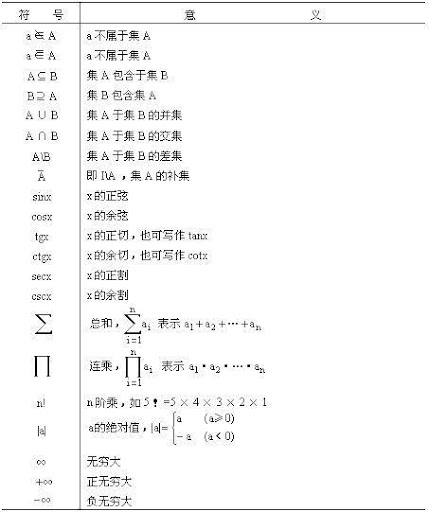
數學符號表及其唸法

符號表檔案:下載


星期四, 6月 03, 2010

什麼是雲端運算?

什麼是雲端運算?
陳瀅 2010/06/02

【前言】

本書為IBM中國研究院團隊長期針對雲端運算之研究心得與實務經驗,內容除了深入淺出定義雲端運算內涵,更深度剖析雲端運算與虛擬化之關鍵技術與應用服務,是全球第一本完整介紹雲端運算與虛擬化技術專書。

雲端運算的定義

一般的說法是,在網路技術剛剛興起的時候,人們畫圖時習慣用一朵雲來表示,因此在選擇一個名詞以代表這種基於網路的運算方式時,就選擇了「雲端運算」這個名詞。雖然這個解釋非常浪漫有趣,卻容易讓人陷入雲裡霧中,不得其解。

進入網路時代後,人們熱中於上網,通過瀏覽網頁獲得資訊。當使用者在瀏覽器上輸入網址後,瀏覽器將以DNS伺服器和網路應用伺服器相互溝通,將網頁內容呈 現在使用者面前,這些互動的過程是透過網路、經路由器轉發而完成的。因為這個過程對使用者而言是看不到的,所以當時人們在繪製網路示意圖時,便將網絡抽象 畫成一朵雲,意指不用關心網絡的轉發過程,只需關注服務器端和客戶端。如圖1.1所示。

隨著網路的發展,寬頻愈來愈普及,戶外的無線上網節點也愈來愈多。除了個人電腦外,也有愈來愈多的設備具備連網功能,比如行動電話、辦公設備,甚至是上網 冰箱等的家電產品。同樣,網路的作用也不再局限於瀏覽網頁、收發郵件,還能夠為企業提供電子商務、客戶關係管理等服務;為一般大眾提供部落格、網路視訊、 網路相簿、網路影音串流等服務;為科學研究機構提供強大的運算處理功能。因此,網路的含義變得更廣,除了人們普遍認知的接入、路由等,還包括了運算、儲 存、服務和軟體等元素。因此,「雲端運算」這個名詞就應運而生了。

從圖1.1中我們可以看出, 雲端運算中的「雲」不僅包含了網路,更包含了那些被描繪在雲外的事物——這個小小的改變看似簡單,實際上蘊含著深刻的變革。

正 如用「雲」描繪網路以強調對網路的運用,而非關注於其運行的細節般,雲端運算用「雲」描繪包括網路、運算、儲存等在內的資訊服務基礎建設,以及包括作業系 統、應用平台、Web 服務等在內的軟體,就是為了強調對這些資源的運用,而不是運行細節。其實,這個概念被提出的時間並不長,然而對這個概念的定義卻是百家爭鳴。一方面體現了 雲端運算包羅萬象的特質,也說明業界對它的重視。既然所有人都希望成為雲端運算產業鏈中的一個角色,自然都會從自身的角度出發來定義雲端運算,那麼對於概 念的提取就是一個求同存異的過程。

下面,我們先列舉幾個一般人普遍認可的定義,然後再給出本書的定義。 維基百科認為,雲端運算是種能夠將動態伸縮的虛擬化資源,透過網路以服務的方式提供給使用者的運算模式,使用者不需要知道如何管理那些支援雲端運算的基礎設施。

Whatis.com 認為,雲端運算是種透過網路連接以獲取軟體和服務的運算模式,讓使用者可以獲得有如使用超級電腦的體驗。使用者透過筆記型電腦與手機連接入「雲」,獲取所需要的資源。

美國加州大學柏克萊分校最近發表了一篇關於雲端運算的報告,該報告認為,雲端運算是指在網路上提供各種應用的服務,也指在資料中心內提供這些服務的硬體和軟體,這些軟硬體則被稱為「雲」。

美國《BusinessWeek》的文章指出,Google 的雲就是由網絡連接起來的幾十萬甚至上百萬台的廉價電腦,這些電腦每天都處理著來自網路上大量的檢索資料和搜尋請求。

《BusinessWeek》在另一篇文章中總結說,從亞馬遜的角度看,雲端運算就是在一個大規模的系統環境中、不同系統間相互提供服務,軟體都是以服務的方式運行,當所有這些系統相互協作,並在網路上提供服務時,這些系統的總體就成為了「雲」。

Salesforce.com 認為,雲端運算是種更優良的業務運行模式。在此模式中,使用者的應用程式在共用的資料中心運行,用戶只需透過登錄和個人化設定,就可以使用這些資料中心的應用程式。

IBM認為,雲端運算是種分享的網路資訊服務的模式,使用者看到的只有服務本身,不用關心相關基礎的建置。

本書沿用IBM 的定義:雲端運算是種革新的IT運用模式。這種運用模式的主體是所有連接網路的實體,可以是人、設備和程式,客體就是IT本身,包括我們現在接觸到的,以及會在不久將來出現的各種資訊服務。

這種運用方式的核心原則是:硬體和軟體都是資源並被封裝為服務,使用者可以透過網路依其需求來使用。在雲端運算中,IT業務通常運行在遠端的分散式系統 上,而非本地端電腦或單一伺服器上。這個分散式系統由網路相互連接,透過開放的技術和標準把硬體和軟體抽象成為動態可擴展、可配置的資源,並對外以服務的 形式提供給使用者。該系統允許使用者透過網路使用這些服務,並獲取資源。使用者透過瀏覽器直接使用網路服務,不需了解背後資源如何調配、如何整合等實際運 作狀況。透過分散式系統,業務的建立、發布、執行和管理都可以在網路上進行,用戶只需按資源的使用量或業務規模付費。

(本文轉載陳瀅新書《雲端策略》,由天下出版發行)

新自旋電池利用磁場充電

中文:http://only-perception.blogspot.com/2009/03/blog-post_3098.html

Physicist develops battery using new source of energy
http://www.physorg.com/news156011642.html

March 11th, 2009

Miami(邁 阿密)大學與日本東京大學及東北大學已經能證明「自旋電池(spin battery)」的存在,若需要充電,則得要對一種稱為磁通道連接(magnetic tunnel junction,MTJ)裝置中的奈米磁鐵施加一大規模的磁場。這種新技術在無可動部件之電腦硬碟的創造上向前邁進一步,那將比目前所使用的硬碟更加快 速、便宜且使用更少能量。在未來,這種新電池能用來為動力車開發新電池。

這項研究將發表在即將出刊的 Nature 上,目前可由該期刊的 AOP 取得。

這種裝置由 Miami 物理學家 Stewart E. Barnes(科學與藝術學院)及其同僚所創造,可儲存能量在磁石中而不是透過化學反應。

如同一輛上緊發條的(winding up)玩具車,自旋電池藉由施加一大規模磁場來「上緊發條」 -- 沒有化學作用涉入。該裝置可能比至今所發現的任何東西都要更好,Barnes 說。

"我們已經預料這種效應,不過這種裝置產生超過百倍以上的過大電壓,且持續數十分鐘,而非我們所預期的數毫秒," Barnes 說。"正是這種違反直覺的事,導致我們在理論上理解發生了什麼事。"

這 種技術背後的祕密是利用奈米磁鐵感應電動勢。除了風格更直接之外,它所使用的原理與傳統電池相同。儲存在電池中能量,不管是在 iPod 或電動車內,它是以化學能的形態存在。當某樣東西「開啟」,這裡有化學反應發生並製造出電流。這項新技術將「磁能」直接轉換成「電能」而無須進行化學反 應。在這種過程中所製造的電流稱為「自旋極化電流(spin polarized current)」,而且在一種新技術,稱為「自旋電子學(spintronics)」中找到用途。

這項新發現增進我們對於磁鐵運作方式 的理解,而其立即應用是將 MTJs 當成電子元件使用,並以有別於傳統電晶體的方式運作。雖然實際裝置的直徑約與人類頭髮相當,而且甚至連 LED 都無法點亮,不過能以這種方式儲存的能源將有潛力讓一輛車運行數哩。其可能性無窮無盡,Barnes 說。

※ 相關報導:

* Electromotive force and huge magnetoresistance in magnetic tunnel junctions
http://www.nature.com/nature/journal/vaop/ncurrent/abs/nature07879.html
http://dx.doi.org/10.1038/nature07879


Pham Nam Hai, Shinobu Ohya, Masaaki Tanaka,
Stewart E. Barnes & Sadamichi Maekawa
Nature advance online publication 8 March 2009
doi: 10.1038/nature07879

...Here we show that such an e.m.f. can indeed be induced by a static magnetic field in magnetic tunnel junctions containing zinc-blende-structured(包含硫化鋅結構的)MnAs(砷化錳)quantum nanomagnets. The observed e.m.f. operates on a timescale of approximately 10^2–10^3 seconds and results from the conversion of the magnetic energy of the superparamagnetic(超順磁的) MnAs nanomagnets into electrical energy when these magnets undergo magnetic quantum tunnelling. As a consequence, a huge magnetoresistance(磁阻)of up to 100,000 per cent is observed for certain bias voltages(偏壓). Our results strongly support the contention that, in magnetic nanostructures, Faraday's law of induction must be generalized to account for forces of purely spin origin. The huge magnetoresistance and e.m.f. may find potential applications in high sensitivity magnetic sensors, as well as in new active devices such as 'spin batteries'.
* 未來電子學:使用量子化電流驅動的奈米裝置
* 微小電容器造就龐大記憶
* IBM 推出新記憶體 10 年內終結硬碟
* 第一個積體奈米線感應器電路
* MIT 以病毒開發出如細胞般大小的電池
* 研究者為次世代混合車革新燃料電池設計
* 陽光將二氧化碳轉變成甲烷
* 太陽是永續能源的明日之星